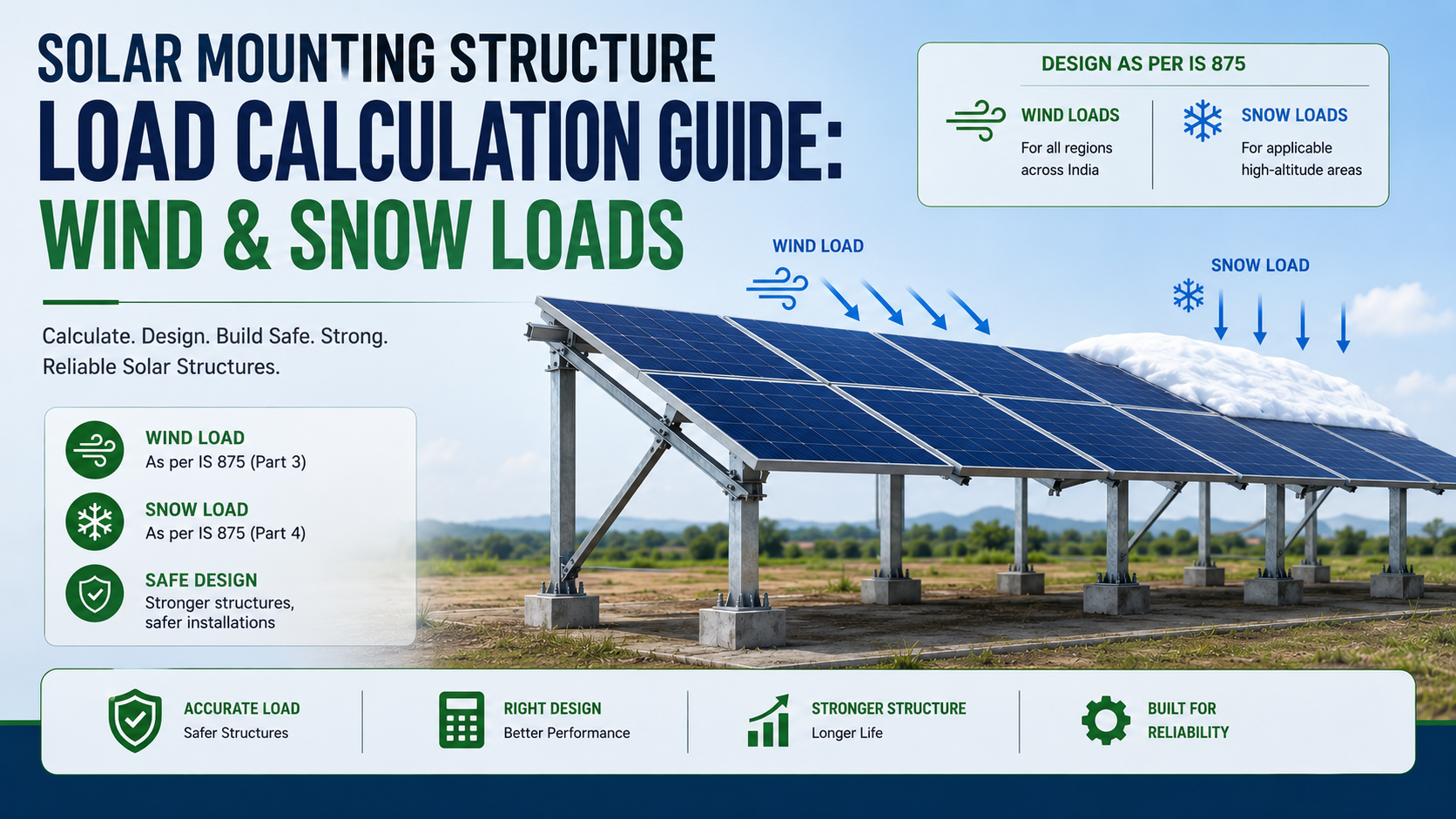
Solar Mounting Structure Load Calculation Guide: & Snow Loads
Designing a solar mounting structure is about more than simply supporting solar panels. Every structure must safely withstand environmental forces such as wind, snow, seismic activity, and the weight of the solar modules throughout its service life. Incorrect load calculations can lead to excessive deflection, structural damage, higher maintenance costs, or even complete system failure.
A well-designed mounting structure begins with accurate load calculations based on recognized engineering standards. In India, designers commonly refer to IS 875 for determining design loads on structures, while project-specific requirements may include additional codes and engineering practices.
This guide explains the fundamentals of solar mounting structure load calculation, the different types of loads acting on a solar structure, and the factors engineers consider when designing safe and durable mounting systems.
Why Is Load Calculation Important for Solar Mounting Structures?
Load calculation determines the forces a solar mounting structure must safely resist throughout its operational life. Proper calculations help engineers select suitable structural sections, foundation systems, connection details, and safety factors while reducing the risk of structural failure.
Accurate calculations help achieve:
- Better structural safety
- Improved long-term performance
- Optimised steel usage
- Reliable foundation design
- Compliance with engineering standards
- Reduced maintenance costs
Every solar project is different. A rooftop installation in Hyderabad experiences different environmental loads than a ground-mounted solar plant in a coastal or mountainous region.
What Types of Loads Act on a Solar Mounting Structure?
Solar mounting structures are designed to resist multiple loads acting simultaneously. Engineers evaluate each load individually before combining them according to applicable design standards.
1. Dead Load
Dead load is the permanent weight carried by the structure.
It generally includes:
- Solar modules
- Mounting rails
- Steel support structure
- Fasteners
- Cable trays
- Junction boxes
Since these loads remain constant throughout the life of the project, they form the foundation of every structural calculation.
2. Wind Load
Wind load is often the governing factor for solar mounting structures, especially in open areas, coastal regions, and elevated rooftops.
Engineers consider:
- Basic wind speed
- Terrain category
- Building height
- Module tilt angle
- Wind direction
- Exposure conditions
- Topography
High wind pressure can create uplift forces that attempt to lift the solar panels from the supporting structure. Proper wind load calculations help determine the required steel sections, anchor bolts, and foundation design.
3. Snow Load
Although snow loads are not significant in most parts of India, they become important in Himalayan and high-altitude regions.
Snow accumulation increases the vertical load on the structure and must be considered when designing projects in areas that experience seasonal snowfall.
Factors affecting snow load include:
- Snow depth
- Roof slope
- Temperature
- Local climatic conditions
4. Live Load
Live loads are temporary forces acting on the structure.
Examples include:
- Maintenance personnel
- Cleaning equipment
- Temporary construction loads
- Inspection activities
These loads are generally lower than permanent structural loads but must still be included during design.
5. Seismic Load
In earthquake-prone regions, engineers also evaluate seismic forces according to applicable seismic design standards.
Seismic design considers:
- Earthquake zone
- Structural weight
- Foundation conditions
- Dynamic response
How Is Wind Load Calculated?
Wind load calculations begin by determining the basic wind speed for the project location.
Engineers then adjust this value using several correction factors, including:
- Terrain category
- Building height
- Risk coefficient
- Topography
- Exposure
These parameters help estimate the design wind pressure acting on the solar modules and supporting structure.
Because rooftop and ground-mounted systems experience different airflow patterns, their wind load calculations are not always identical.
For large commercial projects, engineers often perform detailed structural analysis using specialized design software.
How Is Snow Load Calculated?
Snow load depends on the amount of snow expected at the project location.
Engineers evaluate:
- Ground snow load
- Roof geometry
- Panel inclination
- Snow accumulation
- Sliding effects
Projects located in high-altitude areas require additional consideration to ensure the mounting structure remains stable under maximum snow conditions.
What Factors Affect Solar Structure Design?
Several variables influence the final structural design.
Module Size
Larger solar panels experience greater wind pressure and require stronger support systems.
Tilt Angle
Higher tilt angles increase wind exposure and may require additional structural reinforcement.
Span Length
Longer spans increase bending moments and structural deflection.
Foundation Type
Pile foundations, concrete foundations, and rooftop anchors all influence structural performance.
Steel Section
The profile shape and thickness directly affect the load-carrying capacity of the mounting structure.
Why Are Safety Factors Important?
Engineering safety factors account for uncertainties in material properties, environmental conditions, manufacturing tolerances, and construction practices.
Using appropriate safety factors helps ensure that the structure continues to perform safely even when actual site conditions vary slightly from design assumptions.
Safety factors contribute to:
- Improved structural reliability
- Longer service life
- Better resistance to unexpected loading
- Reduced maintenance risks
Common Mistakes in Solar Structure Load Calculation
Many structural issues can be traced to avoidable design errors.
Common mistakes include:
- Ignoring wind uplift forces
- Underestimating dead loads
- Incorrect foundation assumptions
- Poor connection design
- Using inappropriate steel sections
- Ignoring local environmental conditions
- Overlooking future maintenance loads
Careful engineering review helps reduce these risks before construction begins.
Best Practices for Solar Mounting Structure Design
To achieve reliable structural performance:
- Follow applicable engineering standards.
- Perform site-specific load assessments.
- Use high-quality galvanized steel sections.
- Verify connection details.
- Select appropriate foundations.
- Review calculations before fabrication.
- Inspect installation quality.
- Schedule periodic structural inspections.
Why Choose Quality Steel for Solar Mounting Structures?
Even accurate load calculations cannot compensate for poor-quality materials.
Precision-manufactured galvanized steel profiles offer:
- Consistent dimensions
- Better structural stability
- Improved corrosion resistance
- Reliable fabrication quality
- Long-term durability
Selecting quality steel products helps ensure the structural design performs as intended throughout the project’s life.
Conclusion
Solar mounting structure load calculation is one of the most important steps in designing a safe and durable solar power system. Engineers must evaluate dead loads, wind loads, snow loads, live loads, and other environmental forces before selecting structural members and foundations.
Following recognized engineering standards, performing site-specific calculations, and using precision-engineered galvanized steel components all contribute to reliable long-term performance.
Whether the project is a rooftop installation or a large utility-scale solar plant, proper load calculations help reduce structural risks while improving the overall efficiency and lifespan of the mounting system.
Contact us today: for precision-engineered solar mounting structures for your next project. Contact Rudran Infra Metals to discuss your project requirements, technical specifications, and custom steel profile solutions designed for reliable solar installations.
Frequently Asked Questions
1. What is the most important load in solar mounting structure design?
Wind load is often the governing design load, particularly for rooftop and open-field solar installations.
2. Which standard is commonly used for load calculations in India?
Engineers generally refer to IS 875 for determining wind and other structural loads, along with other applicable codes based on project requirements.
3. Is snow load considered for all solar projects?
No. Snow load calculations are mainly required for projects located in regions that experience regular snowfall.
4. Why are safety factors used in structural design?
Safety factors help account for uncertainties in materials, loading conditions, and environmental influences, improving overall structural reliability.
5. Can load calculations reduce project costs?
Yes. Accurate calculations help optimize steel usage and foundation design while maintaining the required level of structural safety.